
What a Technician Sees This Time of Year
By late October, service calls in Granite Bay start to follow a pattern. A homeowner notices the door is suddenly louder, or it drags a little going up, or there's a draft creeping in along the bottom edge. Nine times out of ten, the cause traces back to a long, dry summer: months of heat and dust have dried out the weatherstripping, baked the lubricant out of the hinges, and left a fine grit coating the tracks and rollers. None of that mattered much when it wasn't raining. Once the first real storms roll through the foothills, though, those same worn parts get wet, swell, stick, or start rusting fast. Getting ahead of it in the fall is a lot cheaper than fixing it after the first cold snap.
Inspect and Replace Weatherstripping
The rubber seal along the bottom of the door and the vinyl strips along the sides take the brunt of summer sun and wildfire-season dust. Look for cracking, flattening, or gaps where the seal has pulled away from the panel. A compromised seal lets in rain, wind-driven debris, and cold air, which can raise garage temperatures in winter and let moisture reach stored items or a finished garage space. Replacement seal kits are inexpensive and are one of the highest-value fixes you can make before the rain starts.
Lubricate Before the Rain, Not After
Dust from a dry summer settles into rollers, hinges, and the track, turning what used to be smooth lubricant into a gritty paste. That combination grinds down metal parts and makes the opener work harder. Wipe down the tracks and hardware with a dry cloth first, then apply a silicone-based garage door lubricant to the rollers, hinges, and springs. Avoid heavy grease, which attracts more dust. Doing this now keeps rust from forming once winter moisture arrives and keeps the door operating quietly through the wet months.
Check the Balance and Listen to the Springs
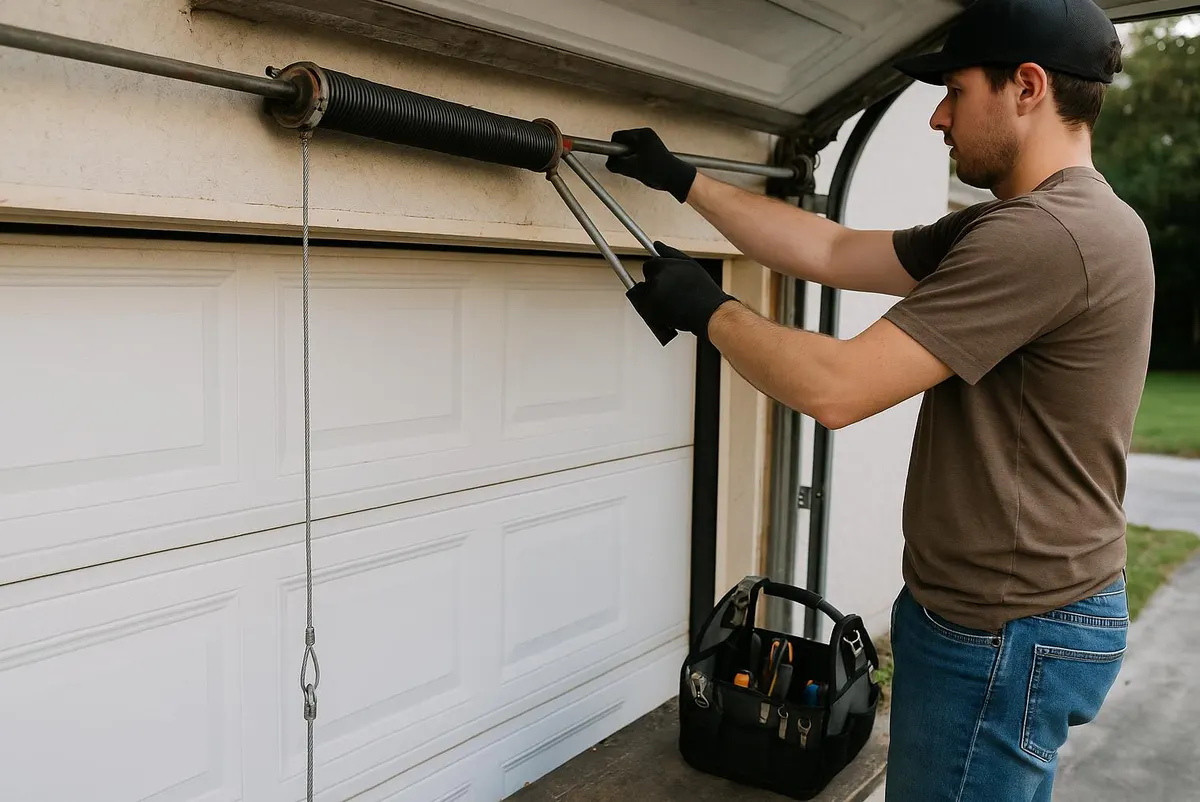
Cold mornings put extra strain on torsion and extension springs, especially ones that have already seen a full dry season of expansion and contraction. Disconnect the opener and lift the door halfway by hand — it should hold its position. If it drops or feels heavy, the springs are losing tension and the opener is compensating, which shortens its lifespan. This is also the time to listen for creaking or popping during operation; a spring that's close to failing in October is not one you want failing during a cold, rainy week when you need the garage most.
Look at the Track Alignment and Panels
Dust and dry heat can cause wood-frame garages and even metal tracks to shift slightly over a hot season. Check that the tracks are still plumb and that there's no visible gap between the rollers and the track wall. Also inspect door panels for small dents or warping — aluminum and steel panels can flex slightly in extreme heat, and a minor misalignment that was tolerable in summer can turn into a binding or rattling door once temperatures drop and materials contract again.
Don't Forget Seismic Bracing
Since this area sits in an active seismic zone, it's worth confirming that any earthquake retrofit bracing on the garage door track and header is still secure. Loose anchor bolts or bent bracing reduce both the stability of the door during a tremor and its resistance to wind-driven rain forcing against the panels in a storm.
Test the Opener and Backup Power
Winter storms in the Sacramento foothills occasionally knock out power. If your opener doesn't already have a battery backup, fall is a good time to add one so you're not stuck manually hoisting a heavy door in the rain. While you're at it, test the auto-reverse safety feature and replace opener remote batteries, which tend to fade right when you need them most.
When to Call Granite Bay Garage Door Works
If your door is dragging, the springs look stretched or rusted, or the weatherstripping is too far gone to simply swap out yourself, it's time to call in a professional before the rain adds moisture to the mix. Our Garage Door Maintenance visits cover a full inspection of springs, tracks, rollers, and seals, and we handle Spring Replacement on the spot when tension has dropped below a safe range. Catching these issues now means one dry-weather appointment instead of an emergency call during a December downpour.
Granite Bay Garage Door Works serves homeowners throughout Granite Bay, Roseville, Rocklin, Folsom, Loomis, Lincoln, Auburn, and Orangevale. Call us today to schedule your winter-ready garage door inspection in Granite Bay, CA before the next storm rolls in.