
That Frustrating Moment When Your Garage Door Won't Stay Closed
You press the button on your remote, watch your garage door descend, and just before it reaches the floor — it stops and goes right back up. You try again. Same thing. Maybe it works on the third try, maybe it doesn't. Either way, you're standing in your driveway in Granite Bay wondering what just happened.
This is one of the most common garage door complaints we hear at Granite Bay Garage Door Works, and the good news is that it's almost always fixable. The tricky part is figuring out which of several possible causes is behind the problem. Let's walk through the most likely culprits and what you can do about each one.
Understanding Why Garage Doors Reverse
Modern garage door openers are equipped with safety features mandated by federal law since 1993. Two systems work together to prevent the door from closing on a person, pet, or object:
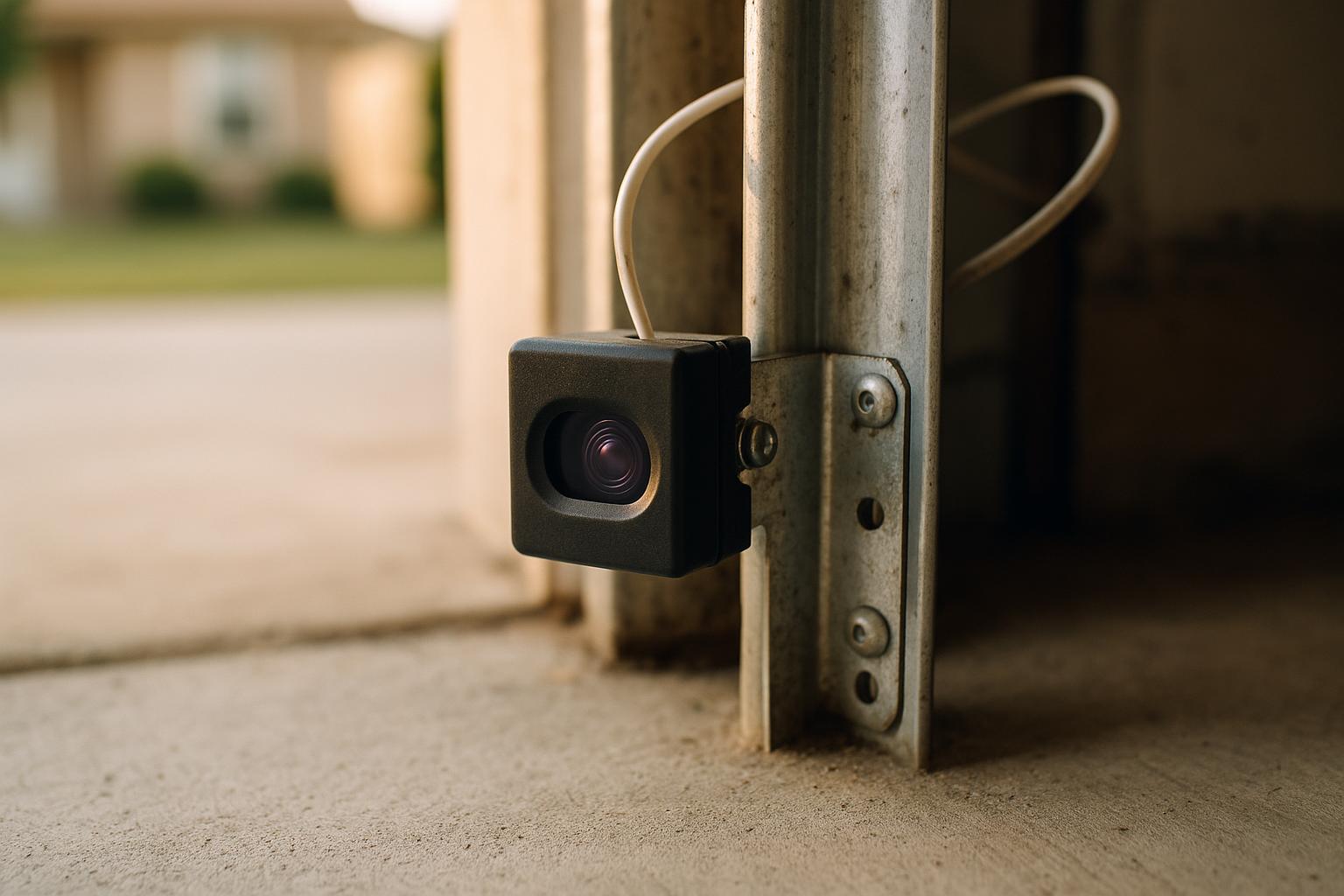
- Photo-eye sensors: Two small sensors mounted near the bottom of the door tracks on either side. They project an invisible infrared beam across the opening. If anything breaks that beam, the door reverses.
- Auto-reverse mechanism: If the door encounters physical resistance while closing — like hitting an object or the floor too hard — it automatically reverses direction.
Both of these systems are essential safety features. But when they malfunction or get knocked out of alignment, they can cause your door to reverse even when nothing is actually in the way.
Cause #1: Misaligned Photo-Eye Sensors
This is the number one reason garage doors reverse before closing, and it's often the easiest to fix. The photo-eye sensors on either side of your garage door opening need to be precisely aligned so the infrared beam connects between them. If one sensor gets bumped — by a bike, a trash can, a lawnmower, or even a curious kid — the beam breaks and the door thinks something is in its path.
What to check:
- Look at the small LED lights on each sensor. On most models, both lights should be solid green (or one green and one amber, depending on the brand). A flickering light usually means misalignment.
- Gently adjust the sensor that appears to be off until the light becomes steady.
- Make sure nothing is physically blocking the beam between the two sensors, including cobwebs, dirt, or leaves.
Here in Granite Bay, we see this issue spike in fall when leaves blow into garages and in spring when homeowners start pulling out yard equipment. A quick wipe of the sensor lenses with a soft cloth can sometimes solve the problem instantly.
Cause #2: Dirty or Obstructed Sensor Lenses
Even if your sensors are perfectly aligned, dirty lenses can weaken the infrared signal enough to cause intermittent reversals. Dust, spider webs, water spots, and pollen can all coat the small glass lenses over time. This is especially common during the dry, dusty summers we experience in the Sacramento region.
Use a soft cloth or cotton swab to gently clean both lenses. Avoid using harsh chemicals that could scratch or cloud the glass.
Cause #3: Incorrect Close-Force or Travel-Limit Settings
Your garage door opener has adjustable settings that control how far the door travels and how much force it uses to close. If the close-limit setting is off, the opener may think the door has reached the floor when it hasn't, or it may interpret normal contact with the ground as an obstruction and reverse.
Signs this might be your issue:
- The door reverses the instant it touches the ground
- The door closes most of the way but stops an inch or two short and reverses
- The opener motor keeps running after the door is fully closed
Most openers have small adjustment screws or dials on the back or side of the motor unit labeled "close limit" and "close force." Your owner's manual will explain how to make small adjustments. However, we recommend being cautious here — setting the force too high can make the door dangerous, and setting the travel too far can damage the door or opener. If you're unsure, this is a great time to call a professional.
Cause #4: Damaged or Worn Tracks
If your garage door tracks are bent, dented, or have accumulated debris, the door can bind or stick as it moves downward. The opener interprets this resistance as an obstruction and reverses. Visually inspect the tracks on both sides of the door for any obvious damage, rust, or buildup. You can clean the tracks with a damp cloth, but do not attempt to bend or reshape them yourself — improperly adjusted tracks can cause the door to come off its rollers entirely.
Cause #5: Broken or Worn Springs and Cables
Your garage door springs do the heavy lifting — literally. They counterbalance the weight of the door so the opener doesn't have to work as hard. When springs weaken or a cable frays, the door becomes heavier than the opener expects. The motor strains, the safety system detects excessive resistance, and the door reverses.
If you notice your door seems sluggish, makes unusual noises, or looks uneven as it moves, worn springs or cables could be the culprit. Spring and cable repair should always be handled by a trained technician. These components are under extreme tension and can cause serious injury if mishandled.
Cause #6: Wiring Issues
Less common but still worth mentioning — damaged or loose wiring between the sensors and the opener can cause erratic behavior, including random reversals. Rodents, moisture, and age can all degrade wiring over time. If you've checked everything else and the problem persists, a wiring issue may be to blame.
When to Call a Professional
Some of these fixes are simple enough for a handy homeowner to tackle. Cleaning sensor lenses, removing obstructions, and checking alignment are all safe DIY tasks. But if you've tried the basics and your door is still reversing, or if you suspect spring, cable, or track damage, it's time to bring in an expert.
At Granite Bay Garage Door Works, we diagnose and repair reversing garage doors every week for homeowners across Granite Bay, Roseville, Rocklin, Folsom, Loomis, and Lincoln. We'll identify the exact cause, explain your options, and get your door working properly — usually in a single visit.
Don't Ignore a Reversing Garage Door
It might be tempting to just keep pressing the button until the door cooperates, but a garage door that won't close reliably is a security risk and a safety concern. An open garage is an invitation for theft, and a door with malfunctioning safety systems could eventually fail in a dangerous way.
If your garage door has been giving you trouble, give us a call or schedule a service appointment. We'll get it sorted out so you can get back to pressing that button once and walking away with confidence.