
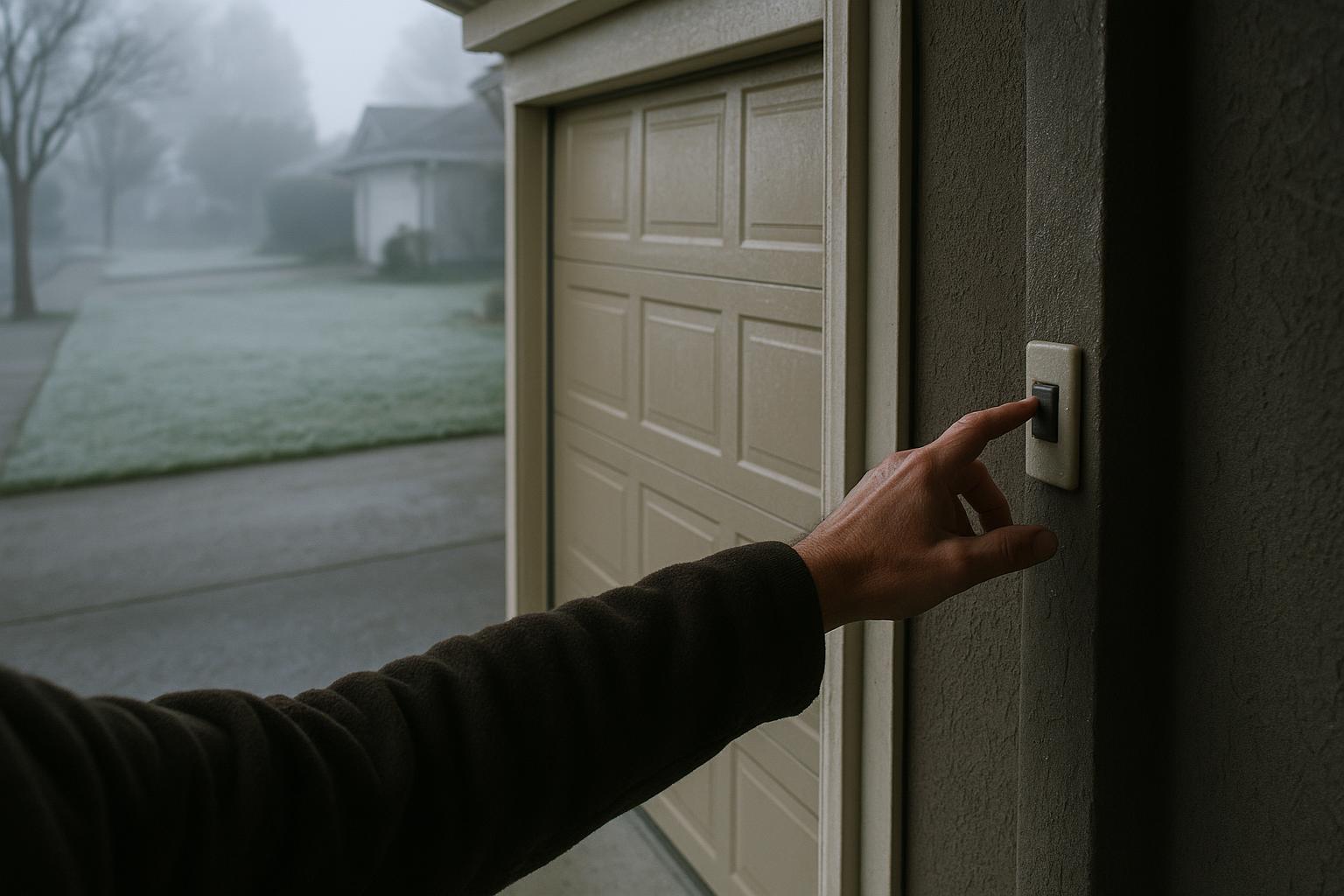
Why Cold Weather Can Stop Your Garage Door in Its Tracks
You're running late on a chilly Granite Bay morning, you hit the button on your garage door opener, and nothing happens. Or maybe the door groans, lifts a few inches, and then stops. Cold weather garage door problems are more common than most homeowners realize, and while our Northern California winters are mild compared to some parts of the country, temperatures in the 30s and 40s are more than enough to cause issues with your garage door system.
Understanding why cold weather affects your garage door — and knowing what to do about it — can save you from being stranded in your garage on the worst possible morning.
Common Reasons Your Garage Door Won't Open When It's Cold
1. Contracted Metal Components
Metal expands in heat and contracts in cold. Your garage door system is full of metal parts — springs, tracks, rollers, and hinges. When temperatures drop, these components shrink slightly, which can increase friction and make the door harder to move. In some cases, the added resistance is enough to prevent the opener from lifting the door at all.
2. Thickened Lubricant
The grease and lubricant on your garage door's moving parts can thicken or become sluggish in colder temperatures. When lubricant loses its fluidity, it stops doing its job. Instead of reducing friction, it actually adds resistance. This is one of the most common — and most easily fixable — causes of cold weather garage door problems.
3. Hardened or Brittle Weatherstripping
The rubber weatherstripping along the bottom of your garage door is designed to create a seal between the door and the ground. In cold weather, this rubber can harden and even stick to the concrete floor, especially if there's any moisture present. When you try to open the door, the weatherstripping grips the floor and holds the door in place, putting strain on the opener.
4. Weakened or Stressed Springs
Garage door springs are under constant tension, and cold weather makes the metal more brittle. If your springs are already aging, a cold snap can push them past their limit and cause them to break. A broken spring means your door won't open — and attempting to force it can cause further damage or create a serious safety hazard.
5. Misaligned or Frozen Tracks
While full-on ice buildup inside garage door tracks is rare here in Granite Bay, condensation can form on metal tracks during cold nights. If temperatures dip low enough, that moisture can freeze and create small obstructions that prevent the rollers from moving smoothly. Even without ice, cold-related contraction can cause slight misalignment in the tracks.
6. Opener Motor Struggles
Garage door openers have motors with specific lifting capacities. When cold weather increases the resistance throughout the system — thicker lubricant, contracted metal, stiff weatherstripping — the motor has to work harder. Older or lower-powered openers may simply not have enough force to overcome the added resistance, causing the door to stall or refuse to open.
What You Can Do Right Now
If your garage door is stuck on a cold morning, here are a few safe steps you can try before calling a professional:
- Try again. Sometimes the opener just needs a second attempt. Press the button again and listen for the motor engaging.
- Check the weatherstripping. Look along the bottom of the door to see if the rubber seal is stuck to the floor. If it is, gently break the seal by hand — don't yank the door up forcefully.
- Inspect the tracks. Look for any visible ice, debris, or obstructions in the tracks on both sides of the door.
- Use the manual release. Pull the red emergency release cord to disengage the opener, then try lifting the door by hand. If it's extremely heavy or won't budge, stop — you may have a broken spring.
- Don't force it. If the door won't open manually or with the opener, forcing it can damage the tracks, panels, cables, or opener. This is when it's time to call a technician.
How to Prevent Cold Weather Garage Door Problems
The best approach is to prepare your garage door before cold weather arrives. A little preventive care goes a long way toward avoiding a frustrating breakdown.
Switch to a Cold-Weather Lubricant
Replace standard grease with a silicone-based garage door lubricant. Silicone lubricants maintain their viscosity in colder temperatures and won't thicken up the way petroleum-based products do. Apply it to the springs, rollers, hinges, and tracks at least once before winter and again midseason.
Inspect and Replace Weatherstripping
If your bottom weatherstripping is cracked, brittle, or overly worn, replace it before cold weather sets in. Fresh, flexible weatherstripping creates a proper seal without bonding to the concrete floor. This small investment protects your garage from drafts and prevents the door from sticking.
Schedule a Fall Maintenance Appointment
A professional tune-up in the fall is one of the smartest things you can do for your garage door. A technician will inspect the springs, lubricate all moving parts with the right products, check track alignment, test the opener's force settings, and identify any components that are close to failing. Catching a worn spring or a struggling opener before winter means you won't be dealing with a breakdown on the coldest morning of the year.
Keep the Garage Above Freezing
If your garage is insulated or semi-conditioned, keeping the interior temperature above freezing helps protect all the mechanical components. Even a small space heater used occasionally can make a difference during the coldest stretches. Homeowners in Granite Bay, Roseville, and the surrounding Placer County communities typically see enough cold mornings each winter to make this worth considering.
Test Your Door Regularly
Don't wait for a cold morning to find out something is wrong. Open and close your garage door a few times each week during the colder months and pay attention to how it sounds and moves. If it's getting slower, louder, or more sluggish, address the issue before it becomes a full failure.
When to Call a Professional
Some cold weather issues are simple fixes you can handle yourself — reapplying lubricant, freeing stuck weatherstripping, or clearing debris from the tracks. But other problems require professional attention:
- A broken or visibly damaged spring
- A door that's too heavy to lift manually
- An opener motor that runs but the door doesn't move
- Tracks that are visibly bent or misaligned
- Cables that are frayed, loose, or hanging
These are situations where attempting a DIY repair can lead to injury or further damage to your garage door system. Springs, in particular, are under extreme tension and should only be handled by a trained technician.
Don't Let a Cold Morning Leave You Stuck
Cold weather garage door problems are preventable with the right maintenance and preparation. If your garage door has been giving you trouble on chilly mornings — or if it's been a while since your last tune-up — the team at Granite Bay Garage Door Works is here to help. We serve homeowners throughout Granite Bay, Rocklin, Folsom, Loomis, Lincoln, and Roseville with fast, reliable garage door repair and maintenance. Give us a call and let's make sure your garage door is ready for whatever winter throws at it.