
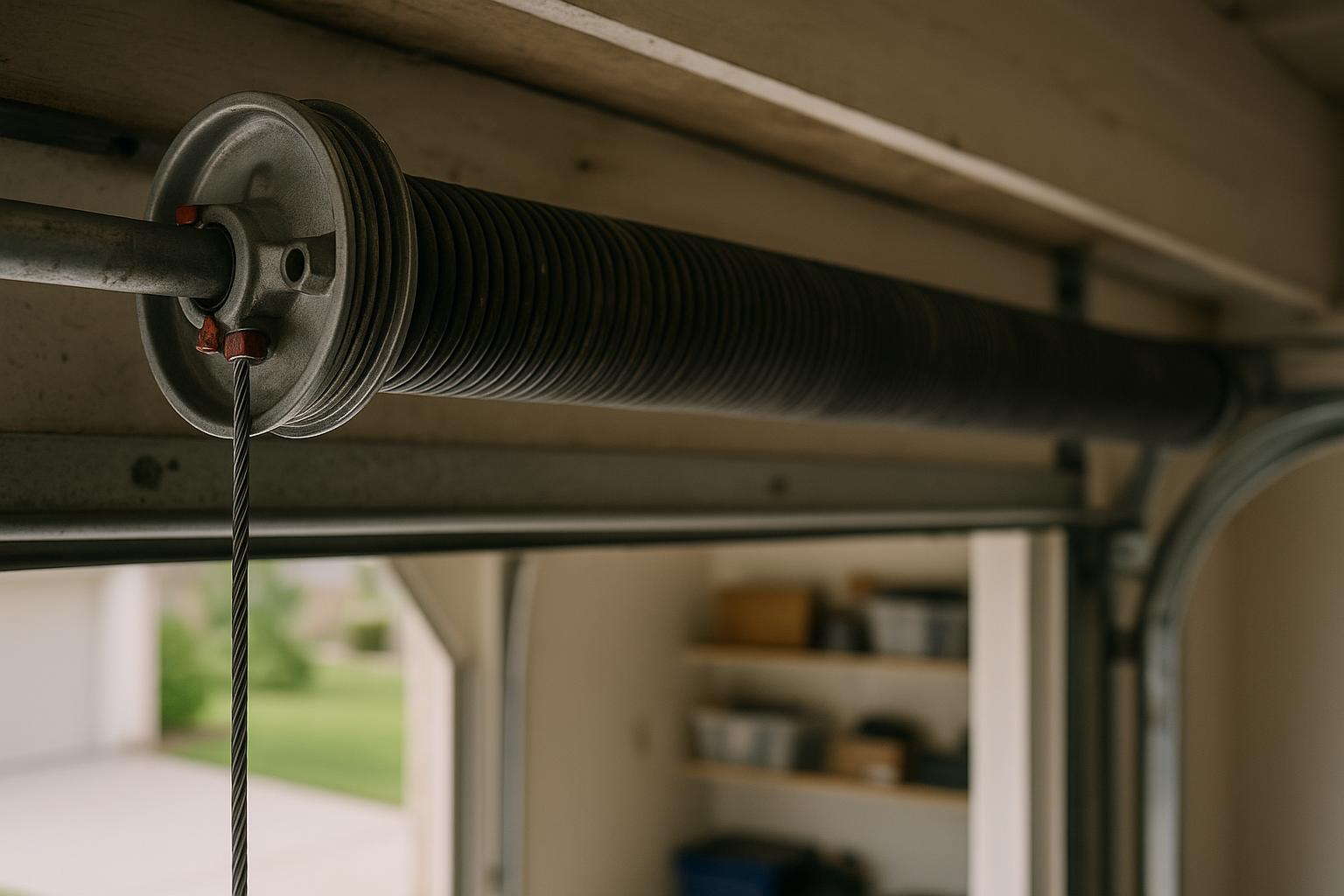
Your Garage Door Springs Are Working Harder Than You Think
Every time you open or close your garage door, a set of tightly wound springs does the heavy lifting — literally. These springs counterbalance the full weight of the door, which can range from 130 pounds for a single-car door to over 400 pounds for a large insulated two-car door. Without functioning springs, your garage door opener alone doesn't have the strength to move that kind of weight.
For homeowners in Granite Bay, the garage door is often used multiple times a day. Between commutes, school drop-offs, weekend errands, and trips to Folsom Lake, those springs cycle thousands of times each year. Over time, the metal fatigues, and eventually the springs will fail. The question isn't if they'll wear out — it's when.
Knowing the warning signs of failing garage door springs can save you from a sudden breakdown, costly damage, or even a dangerous situation. Here's what to watch for and what to do about it.
How Long Do Garage Door Springs Last?
Most standard torsion springs are rated for approximately 10,000 cycles. One cycle equals one full open-and-close of the door. If your household opens and closes the garage door four times a day, that's roughly 1,460 cycles per year — meaning your springs could last about seven years under normal use.
High-cycle springs rated for 25,000 or even 50,000 cycles are available and can significantly extend the lifespan of your system. If you're installing a new garage door or replacing springs, it's worth asking about upgraded options.
Several factors can shorten spring life, including:
- Extreme temperature swings — Granite Bay's hot summers and cool winter nights cause metal to expand and contract, accelerating wear.
- Lack of maintenance — Springs that aren't lubricated regularly develop more friction and rust.
- Improper spring size — If the wrong springs were installed during a previous repair, they'll wear out faster because they're not properly matched to the door's weight.
7 Warning Signs Your Garage Door Springs Are Failing
1. The Door Feels Heavier Than Usual
Try disconnecting the opener by pulling the emergency release cord and lifting the door manually. A properly balanced door with healthy springs should feel relatively light and stay open about three to four feet off the ground. If the door feels extremely heavy or slams down when you let go, the springs have lost tension and are no longer doing their job.
2. The Door Opens Only Partway
If your garage door opens six inches to a foot and then stops, the opener may be struggling against a door that's too heavy because of weakened springs. The opener's safety features may prevent it from forcing the door up further, which is actually a good thing — it prevents motor burnout and cable damage.
3. You Heard a Loud Bang from the Garage
A broken torsion spring releases its stored energy all at once, producing a loud bang that many homeowners mistake for something falling or even a car backfiring. If you heard a sudden loud noise from your garage and now the door won't open, check the springs along the horizontal bar above the door. A broken spring will have a visible gap in the coil.
4. There's a Visible Gap in the Spring
When a torsion spring breaks, it typically snaps near the center, leaving a noticeable gap of one to two inches between the two halves. This is the most obvious sign of a broken spring. If you see this, do not attempt to operate the door — call a professional.
5. The Cables Are Loose or Hanging
The lifting cables on either side of your garage door are kept taut by spring tension. When a spring breaks, the cables can go slack and may even come off the drums. Loose cables are a clear indicator that the spring system has failed.
6. The Door Closes Too Fast
Healthy springs control the speed of the door as it closes. If your garage door drops faster than normal or slams shut, the springs aren't providing adequate resistance. This is a safety hazard, especially in homes with children or pets.
7. The Door Looks Crooked or Uneven
If your garage door has two extension springs (one on each side) and only one breaks, the door may open unevenly — one side rising higher than the other. This puts stress on the tracks, rollers, and opener, and can cause additional damage if not addressed quickly.
Why You Should Never Replace Garage Door Springs Yourself
We understand the DIY spirit — plenty of Granite Bay homeowners are handy and capable of tackling home projects. But garage door spring replacement is one job that should always be left to trained professionals. Here's why:
- Extreme tension: Torsion springs are wound under tremendous force. A spring that slips during installation can cause severe injury.
- Specialized tools required: Proper replacement requires winding bars, vice grips, and specific knowledge of spring calculations based on door weight, height, and track configuration.
- Risk of further damage: Incorrectly installed springs can damage cables, drums, the opener, or the door itself, turning a $200–$400 repair into a much more expensive problem.
Professional technicians handle spring replacements safely and efficiently, and a reputable company will also inspect the rest of the system while they're there to catch any other issues.
What to Expect During a Spring Replacement
When you call for a spring replacement, here's what a typical service visit looks like:
- Inspection: The technician inspects the entire door system, including springs, cables, drums, rollers, tracks, and the opener.
- Spring removal: The broken or worn spring is carefully unwound and removed.
- New spring installation: A new spring matched to your door's exact weight and dimensions is installed and wound to the correct tension.
- Balance test: The door is tested manually to ensure proper balance and smooth operation.
- Lubrication and adjustment: All moving parts are lubricated, and any necessary adjustments are made to tracks, cables, or the opener.
Most spring replacements take about an hour, and many garage door companies — including those serving the Granite Bay, Roseville, and Rocklin areas — offer same-day or emergency service since a broken spring effectively locks you out of your garage.
Should You Replace Both Springs at Once?
If your garage door uses two springs and only one has broken, we strongly recommend replacing both at the same time. The reasoning is simple: both springs were installed at the same time and have endured the same number of cycles. If one has broken, the other is likely close behind. Replacing both saves you from paying for a second service call in a few weeks or months, and it ensures the door is evenly balanced.
Keep Your Garage Door Running Safely
Your garage door is the largest moving component of your home, and the springs are the most critical part of the system. Paying attention to the warning signs above can help you catch a problem before it becomes an emergency.
If you've noticed any of these symptoms — or if it's simply been several years since your springs were inspected — it's a good idea to have a professional take a look. At Granite Bay Garage Door Works, we provide fast, honest spring replacement and garage door repair for homeowners throughout Granite Bay, Roseville, Rocklin, Folsom, Loomis, and Lincoln. Give us a call, and we'll make sure your door is safe, balanced, and working the way it should.